


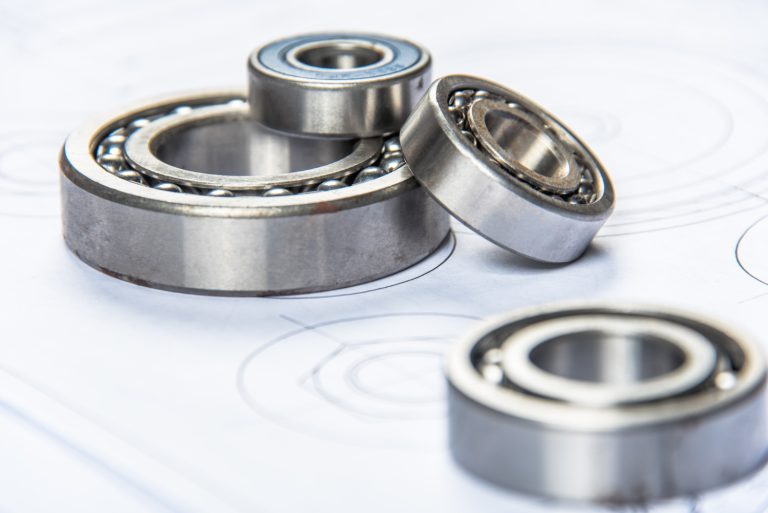
Recent advances in bearing design have revolutionized efficiency and sustainability across multiple industries. Through the incorporation of advanced materials and cutting-edge technology, modern bearings have become not only more reliable but also significantly more durable. These developments enable bearings to withstand higher loads for extended periods, enhancing the overall performance of the systems in which they operate. As industrial applications evolve—from automotive to aerospace and beyond—bearings are being designed with increasing adaptability and precision. This ongoing innovation reinforces the industry’s commitment to mechanical efficiency and environmental responsibility, shaping the future of sustainable engineering.
Recent Advances in Bearing Design: Efficiency, Innovation, and Sustainability
Recent advances in bearing design have revolutionized efficiency and sustainability across multiple industries.
Through the incorporation of advanced materials and cutting-edge technology, modern bearings have become not only more reliable but also significantly more durable.
These developments enable bearings to withstand higher loads for extended periods, enhancing the overall performance of the systems in which they operate.
As industrial applications evolve—from automotive to aerospace and beyond—bearings are being designed with increasing adaptability and precision.
This ongoing innovation reinforces the industry’s commitment to mechanical efficiency and environmental responsibility, shaping the future of sustainable engineering.
Advanced Bearing Materials
Ceramic Bearings
The use of ceramic materials in ball bearing manufacturing represents a major milestone in engineering progress.
Ceramic bearings deliver exceptional heat and corrosion resistance, outperforming traditional metallic options.
Their superior hardness and low friction make them ideal for high-wear environments, ensuring longer service life and stable performance under extreme conditions.
Hybrid Bearings (Steel and Ceramic)
Another breakthrough is the development of hybrid bearings, combining steel races with ceramic rolling elements.
This hybrid configuration merges the structural toughness of steel with the lightweight and low-friction advantages of ceramics.
Hybrid bearings are especially effective in high-speed and hostile environments, providing:
- Reduced maintenance intervals,
- Extended operating life,
- Increased productivity and energy efficiency.
Advanced Lubrication Technologies
Innovations in lubrication chemistry have been equally transformative.
Modern lubricants minimize friction and heat generation, improving operational smoothness and prolonging bearing life.
These advancements not only enhance performance but also reduce energy consumption and operating costs, reinforcing sustainable industrial practices.
Summary:
Advanced materials such as ceramics and hybrids, coupled with next-generation lubricants, are shaping the future of bearing design—delivering higher durability, lower friction, and enhanced energy efficiency.
Modern Manufacturing Technologies
Technological progress in manufacturing has been instrumental in advancing bearing performance and customization.
Additive Manufacturing (3D Printing)
3D printing enables rapid prototyping and customized designs that precisely match specific applications.
This flexibility allows engineers to optimize bearing geometry for load conditions and installation environments, enhancing both fit and function.
Nanotechnology
Nanostructured surface coatings have emerged as a key innovation, drastically reducing friction and wear.
By applying nanoparticles to contact surfaces, manufacturers achieve smoother finishes, longer service life, and greater energy efficiency.
Precision Machining
High-precision machining ensures ultra-tight tolerances and dimensional accuracy.
This method minimizes variation, resulting in bearings with superior rotational balance, quiet operation, and extended reliability.
Conclusion:
The synergy between 3D printing, nanotechnology, and precision machining marks the dawn of a new era in bearing production—one defined by customization, efficiency, and sustainability across the automotive, aerospace, and heavy industrial sectors.
Aerodynamic and Thermal Design
Aerodynamic Optimization
Modern bearings feature aerodynamic designs engineered to reduce air resistance during high-speed operation.
This improvement enhances energy efficiency and maintains stability under dynamic conditions—critical in sectors like aviation and motorsport.
Advanced Thermal Management
Effective thermal dissipation is crucial for maintaining bearing integrity and preventing premature wear.
New bearing geometries and heat-dissipating materials ensure optimal operating temperatures, even under continuous stress.
Embedded Temperature Sensors
The integration of embedded thermal sensors enables real-time condition monitoring.
This data-driven approach facilitates predictive maintenance, allowing operators to make informed adjustments before failures occur.
Such systems are a cornerstone of the Industry 4.0 transformation, connecting mechanical components to intelligent control networks.
Result:
Aerodynamically optimized and thermally managed bearings offer superior reliability, safety, and adaptability—essential for next-generation mechanical systems.
IoT Integration and Intelligent Systems
Embedded Sensor Monitoring
The integration of IoT-enabled sensors within bearings has transformed maintenance practices.
These sensors continuously measure temperature, vibration, and load, transmitting real-time data to monitoring platforms.
Operators can respond immediately to anomalies, minimizing downtime and eliminating unnecessary preventive maintenance.
Self-Diagnostic Bearings
Modern bearings now include self-diagnostic capabilities, enabling them to communicate directly with centralized control systems.
They autonomously alert operators when performance deviates from optimal thresholds, enabling proactive maintenance and reducing unscheduled stoppages.
Predictive Maintenance via IoT Analytics
Data collected from IoT-connected bearings supports predictive analytics, identifying potential failures before they occur.
This predictive model extends component life, enhances safety, and reduces operational costs—supporting data-driven decision-making in industrial automation.
Conclusion:
The integration of IoT and smart diagnostics is revolutionizing bearing technology, paving the way for self-monitoring, adaptive, and energy-efficient industrial systems.
Sustainability and Eco-Friendly Bearings
Use of Recyclable and Low-Impact Materials
Eco-conscious manufacturing now prioritizes recyclable materials and low-emission production processes.
By selecting sustainable raw materials, manufacturers reduce waste and promote a circular product lifecycle, aligning with global environmental standards.
Energy-Efficient Operation
New low-friction designs significantly reduce power consumption during operation.
This results in both extended equipment life and lower carbon emissions, delivering economic and ecological benefits.
Biodegradable Bearing Solutions
Recent developments include biodegradable bearings for short-life-cycle or disposable applications—such as agricultural equipment or single-use devices—offering practical solutions with minimal environmental impact.
Result:
Eco-friendly bearings combine high mechanical performance with sustainable responsibility, representing the next step toward green mechanical engineering.
Conclusion
Recent advances in bearing design are reshaping industrial performance by enhancing efficiency, durability, and sustainability.
Key trends include:
- Adoption of advanced materials (ceramic, hybrid, and high-strength alloys);
- Implementation of digital and predictive technologies;
- Integration of IoT and smart sensors;
- Commitment to sustainable manufacturing practices.
Through the convergence of material science, precision engineering, and digital intelligence, bearings have evolved into intelligent, efficient, and environmentally conscious components—fundamental to the future of mechanical innovation and industrial sustainability.
ADVERTISING


